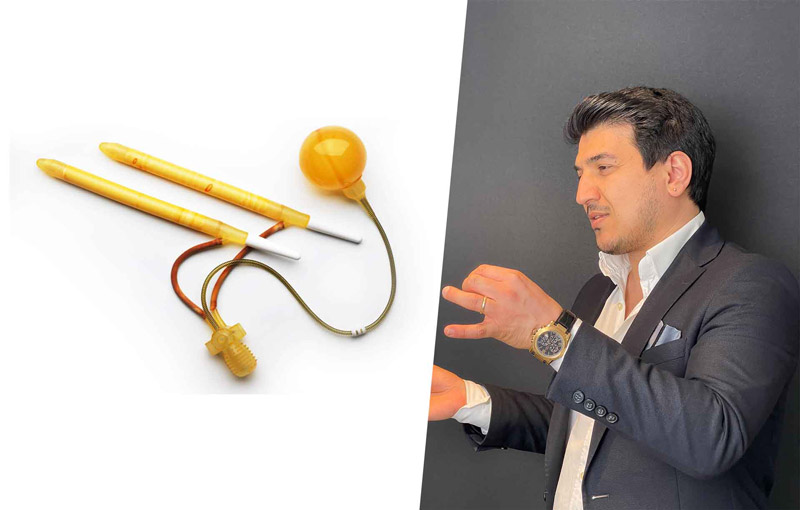
Surgical Authority
Choosing a Penile Implant Surgeon: Why High-Volume Experience Matters
Penile prosthesis surgery outcomes depend heavily on how often a surgeon performs it. Dr. Tuncay Tas operates at one of Turkey's highest-volume prosthetic urology centers, performing over 100 cases a year, well above the published high-volume threshold.
Table of Contents
What Is Penile Prosthesis Surgery?
Penile prosthesis surgery is a highly effective surgical treatment for severe erectile dysfunction. Specifically, it helps men whose ED has not responded to medication or injection therapy.
Surgeons implant a medical device into the penis to restore an erection suitable for intercourse. Unlike pills or injections, the device becomes a permanent part of daily function, rather than something used only when needed.
Two main types exist. First, the inflatable prosthesis (three-piece or two-piece) offers the most natural-looking erection and flaccidity, so it remains the most common choice at high-volume centers.
Alternatively, the malleable prosthesis is simpler to use. Consequently, it suits older patients or those with limited manual dexterity well.
In Turkey, demand for penile prosthesis surgery has grown significantly. As a result, a small number of centers, including SafeFill Clinic, have emerged as recognized high-volume leaders in prosthetic urology.
Choosing the Right Penile Prosthesis Type
For many patients, choosing the right implant type matters as much as choosing the right surgeon. Therefore, Dr. Tas walks each patient through the practical trade-offs between inflatable and malleable options before recommending a specific device.
Ultimately, the goal is a result that fits each patient's lifestyle and expectations, not a generic recommendation.
Patient Selection and Surgical Indications
Ideal candidates typically include men with severe ED unresponsive to oral medication or injections. Particularly, candidates may have Peyronie's disease combined with significant curvature and ED, post-prostatectomy or pelvic surgery-related ED, or diabetes-induced and vascular ED.
Because outcomes depend heavily on proper candidate selection, Dr. Tas requires a thorough evaluation first. Specifically, this includes hormonal, vascular, and psychological assessment before he proceeds with any case.
Age alone rarely disqualifies a patient. Instead, Dr. Tas focuses on overall health, realistic expectations, and whether the patient has already tried less invasive options without lasting success.
Why Penile Prosthesis Surgery Volume Matters: The 100+ Case Standard
International urological guidelines and surgical outcome studies consistently show a clear pattern. Specifically, centers performing more than 100 penile prosthesis surgeries per year achieve lower complication rates, including infection, erosion, and mechanical failure. Additionally, they report faster surgical times, shorter hospital stays, and greater patient and partner satisfaction.
Data from New York State supports these findings. In a study by Kashanian et al., hospital and surgeon volume significantly influenced which type of penile prosthesis surgeons inserted and how well patients did afterward. Separately, an analysis using the Atlas All-Payor Claims dataset grouped surgeons into quartiles by annual implantation rate, ranging from a lowest quartile of 0 to 5 implants per year up to a highest quartile above 31 implants per year.
Notably, surgeons in that top quartile had significantly lower reoperation rates. This finding matches research by Onyeji et al., which suggests that more than 31 cases per year represents a reasonable minimum for defining a high-volume center.
Furthermore, in their review of over 14,000 cases spanning 2000 to 2014, Kashanian and colleagues found that inflatable prostheses made up 88% of all cases. High-volume centers favored their use, largely due to greater surgical expertise and better supporting infrastructure (Kashanian JA et al., J Sex Med 2018;15:245-250).
At SafeFill Clinic, Dr. Tas has consistently exceeded this threshold for several years. Consequently, the clinic serves as a referral hub for complex and revision penile prosthesis surgery cases from across the region.
Preoperative Protocols
Before surgery, Dr. Tas follows strict preoperative protocols. These include urine culture and HbA1c testing, especially for diabetic patients, plus a preoperative antiseptic wash with chlorhexidine. Additionally, patients start oral antibiotics 48 hours before surgery, with antifungal prophylaxis added for diabetic patients.
Surgical Technique and Duration
During the procedure itself, Dr. Tas uses the no-touch technique. This minimizes skin contact with the implant, which in turn reduces infection risk. He places the device through either an infra-pubic approach, preferred for quicker exposure and pump placement, or a penoscrotal approach, which allows better concealed pump positioning.
Typically, a malleable prosthesis takes 30 to 45 minutes, while an inflatable prosthesis takes about 60 to 90 minutes. Special cases, such as Peyronie's disease correction or corporeal fibrosis from prior surgery, may require additional modeling or grafting.
Recovery and Follow-Up
Afterward, most patients stay one to two nights in hospital. Dr. Tas manages pain with a stepped pain-relief plan, plus antibiotics for 7 to 10 days.
He then guides device activation training at 4 to 6 weeks, followed by regular follow-up visits to assess device function.
How Dr. Tas Manages Complications
Infection occurs in fewer than 3% of cases. Dr. Tas reduces this risk further with antibiotic-coated implants and strict aseptic technique. Mechanical failure affects roughly 5 to 10% of cases, more often with older-generation devices, since modern implants typically last 10 to 15 years or longer.
If erosion or migration occurs, Dr. Tas addresses it with prompt removal or repositioning. Meanwhile, glans hypermobility, sometimes called a floppy glans, usually responds well to a glanulopexy procedure when he identifies the risk during the original surgery.
Overall, these complication rates compare favorably with other major urological procedures. For this reason, Dr. Tas discusses each risk openly during consultation, rather than minimizing it, so patients can weigh the trade-offs clearly.
Success Rates and Patient Satisfaction
According to peer-reviewed literature and SafeFill Clinic's own institutional data, the overall success rate for penile prosthesis surgery generally exceeds 90%. Additionally, patient satisfaction ranges from 85 to 95%, and partner satisfaction from 80 to 90%.
The Kashanian study also links high hospital volume to better device selection and outcomes overall. This reinforces why centralized, experienced providers tend to produce better results, particularly for complex or revision penile prosthesis surgery.
Naturally, numbers alone do not capture everything. Therefore, Dr. Tas also tracks how patients feel about their result at follow-up visits, not just whether the device functions mechanically, since both factors shape long-term satisfaction.
Assoc. Prof. Dr. Tuncay Tas
Board-Certified Urologist & Male Sexual Health Specialist, based in Istanbul, at SafeFill Clinic. Performing over 100 penile prosthesis surgeries annually, Dr. Tas has access to all FDA-approved implant brands, including AMS, Coloplast, and Rigicon.
He also offers multilingual support for international patients. Above all, he tailors device choice and technique to each patient's anatomy and goals, rather than defaulting to a single approach.
Frequently Asked Questions
What counts as a high-volume center?
Why does surgical volume affect outcomes?
How long does a penile implant last?
Is the procedure safe?
Which implant type is more common?
Can revision or complex cases be treated here?
How long is recovery?
Do international patients receive support?
Send Us a Message
Considering Penile Prosthesis Surgery?
Book a confidential consultation with Assoc. Prof. Dr. Tuncay Tas to discuss your case and treatment options.